
The argument of knowledge against physicalism

(Portuguese text below/Texto em Português abaixo)

This time, what I bring is a discord between experts about knowledge versus physicalism. Is it that having the total information of something is sufficient without having had the experience with or of that something? Is physicalism, where all facts are physical facts, learned by exchange of ideas, sufficient for all possible perceptions of the same something?

Perhaps these questions had been around for some time, but it was with the philosopher Frank Jackson in 1982 that he invited everyone to do a mental experiment, called “Mary’s Room.”

This experiment involved a character named Mary and Mary in spite of having all the physical knowledge about colors and how they are transported to our brain so we can see them, Mary had never seen any color at all. Mary lived in a black and white room, the clothes were black and white, the books, the computer. Everything. Even though Mary could hypotetically see them, she lived a life without color. Until one day an image of a colored apple appeared on her computer.

Well, what Frank Jackson states is that even though Mary knew all about colors, on that day she first saw them, she learned something new.

And so having the knowledge of the physical facts is not enough.

This triggers thus, the argument of knowledge and results in… a discord. We have on the one hand, philosophers trying to counter Frank Jackson, saying that Mary having the full knowledge of colors will create the same mental state as someone who actually sees the world in color. However, the other half of philosophers interested in this subject, says that basing ourselves on physical facts described by words is not enough for the knowledge to be total.

If Mary actually learned something new when she saw the apple in color, the physical facts of a given object will not suffice and consequently there will be facts about the object that can not be considered physical, as Frank Jackson points out.

So how can these non-physical facts be characterized?

One of the possible responses to the existence of non-physical facts is qualia: perceptions or experiences that can not be crossed by two minds through words.

In spite of a vast and even exhaustive description of an object or event, the person who listens to us can never absorb our experience in the same way. Imagine that I am telling someone, as it was a certain experience to have fallen in love. Even if I try to describe it in a very detail way, the person can not effectively grasp all that I have felt with that event. And so do other feelings, colors, smells, tastes.

 It’s kinda like we are the only ones who could really know what we feel at that moment for that particular “thing”. Qualia is a first-person perception, whereas Mary’s perception was driven by a third-person account, in this case, science books. When Mary lives the event in the first person, this event becomes a qualitative state where it is referred to by many as a conscious state.

Thus, the theory of physicalism, already described here, in which a subject can not know everything through the exchange or absorption of ideas, for example, an empirical article gets contradicted. Basically, the subject needs first-person experience for full understanding.

It may seem very intuitive to respond to this experiment that you learn something new. Which was what I thought. However, this subject is still expanded to this day in various scientific debates.

Besides, and this is something that my professors have said a lot (and I believe yours too), we must always take into account all the theories and hypotheses covered in a given subject, whether they seem plausible or not. And one of the hypotheses that runs counter to the argument of knowledge is the hypothesis of ability, in which Lewis-Nemirow asks whether “it is possible for Mary to have all concrete knowledge?” For only an omniscient subject could acquire all the knowledge of the world, something impossible, and therefore, according to this hypothesis, Mary does not learn new knowledge, but instead acquires new skills, such as recognizing, remembering and imagining colors.

Perhaps, and notwithstanding our own opinions on the debate, this is a thought longer than at the beginning we believed it to be, but I take from the knowledge argument is that Mary’s physical knowledge is an objective knowledge, whereas when experienced by the first person is a subjective knowledge. This may lead us to think that reality itself and our mind are not purely physical.

O argumento do conhecimento contra o fisicalismo

Desta vez, o que vos trago é uma discórdia entre peritos sobre o conhecimento versus fisicalismo. Será que ao possuir a informação total de algo é suficiente sem termos tido a experiência com ou de esse algo? Será o fisicalismo, onde todos os factos são factos físicos, aprendidos por troca de ideias, suficiente para todas as possíveis perceções do mesmo algo?

Talvez estas questões já rondassem as nossas mentes durante algum tempo, mas foi com o filósofo Frank Jackson, em 1982 que convidou a todos fazerem um experimento mental, chamado de “O quarto da Mary”.

Este experimento envolvia uma personagem chamada por sua vez, Mary e a Mary apesar de ter todo o conhecimento físico sobre cores e como são transportadas para o nosso cérebro para as podermos ver, a Mary nunca tinha visto alguma vez, cor que fosse. A Mary vivia num quarto preto e branco, as roupas eram pretas e brancas, os livros, o computador. Tudo. A Mary apesar de as poder ver, vivia uma vida sem cores. Até um dia em que no seu computador apareceu uma imagem de uma maçã a cores.

Ora, o que Frank Jackson enuncia é que apesar de Mary saber tudo sobre cores, naquele dia que as viu pela primeira vez, aprendeu algo novo.

E por isso ter o conhecimento dos factos físicos não é o suficiente.

Isto despoleta assim, o argumento do conhecimento e…uma discórdia. Temos por um lado, filósofos, a contrariar Frank Jackson, referindo que Mary ao ter o total conhecimento das cores irá criar o mesmo estado mental que alguém que veja o mundo a cores. Porém, a outra metade de filósofos interessados neste assunto, refere que basearmo-nos em factos físicos caracterizados por palavras não é suficiente para o conhecimento ser total.

Se Mary de facto, aprendeu algo novo quando viu a maçã a cores, os factos físicos de um determinado objeto não serão suficientes e consequentemente, haverão factos sobre o objeto que não podem ser considerados físicos, como Frank Jackson aponta.

Assim, como poderão ser esses factos não físicos caracterizados?

Uma das respostas possíveis para a existência de factos não físicos são as qualia: perceções ou experiências que não podem ser cruzadas por duas mentes através de palavras.

Em que apesar de uma vasta e até exaustiva descrição de um objeto ou acontecimento, a pessoa que nos ouve, nunca poderá absorver a nossa experiência da mesma maneira. Imaginemos que estou a contar para alguém, como foi uma certa experiência ao ter-me apaixonado. Descrevendo ao mais pormenor detalhe, a pessoa mesmo assim, não poderá apreender efetivamente tudo o que senti com aquele acontecimento. E o mesmo acontece com outros sentimentos, cores, cheiros, sabores.

 É como que só nós pudéssemos saber realmente o que sentimos naquele momento para aquela determinada “coisa”. A qualia é uma perceção na primeira pessoa, enquanto que a perceção da Mary era conduzida por um relato na terceira pessoa, neste caso, livros de ciência. Quando Mary vive o evento na primeira pessoa, este evento torna-se num estado qualitativo, onde é referida por muitos ser um estado consciente.

Assim, é contrariada a teoria do fisicalismo, já antes aqui descrita, em que um sujeito não poderá saber tudo através apenas da troca ou absorção de ideias em, por exemplo, um artigo empírico. O sujeito precisa de experiência na primeira pessoa para uma total compreensão.

Pode parecer muito intuitivo responder a este experimento que se aprende algo novo. Por certo, foi o que eu pensei. Porém, este assunto é ainda expandido aos dias de hoje em vários debates científicos.

Além de que, e isto é algo bastante dito pelos meus professores (e acredito pelos vossos também), há que ter sempre em conta todas as teorias e hipóteses abarcadas num determinado assunto, quer nos pareçam plausíveis ou não. E uma das hipóteses que contraria o argumento do conhecimento é a hipótese da habilidade, em que Lewis-Nemirow questiona se “é possível a Mary ter todo o conhecimento concreto?” Pois apenas um sujeito onisciente poderia adquirir todo o conhecimento do mundo, sendo isto algo impossível e por isso, de acordo com esta hipótese, Mary, não aprende novo conhecimento, mas sim, em contrapartida, adquire novas habilidades, como reconhecer, lembrar e imaginar cores.

Talvez e, não obstante às nossas próprias opiniões sobre o debate, este seja mais longo do que ao início pensássemos ser, mas o que retraio deste argumento é que o conhecimento físico de Mary é um conhecimento objetivo, enquanto que quando experienciado pela primeira pessoa, torna-se um conhecimento subjetivo. Isto poderá a levar-nos a pensar que a própria realidade e a nossa mente não são puramente físicas.
Time Travel and so

(Disclaimer: I’m not a professional. I’m just a curious mind that still needs to learn a lot. Portuguese version below.)

I found a new series two months ago that I had to put in the list of my favorites. The series is German and is called “Dark”. I started to watch it because it is indeed German. I didn’t even know initially quite well what it was about. I have this strange fascination for German, a language that for many is considered cold and rigid, but for me, it’s phonology has something very interesting, becoming one of my favorites to listen and one of the languages ​​I have been trying to learn by myself.

What I did not know was that I would be equally won by the plot of the series. Simply amazing in my opinion.

“Dark” who uses a dull color palette and adds a dark filter to his lens to capture the obscured and mysterious history makes us believe that cinematography is as heavy as the story itself, and is thus consistent in wanting to show the murders , the lies and the frightening secrets, both of the village and the characters that, as we see them grow, become more solitary and melancholic in our eyes.

We are in the year 2019 and when a child disappears and two other dead children appear from nowhere, chaos settles.

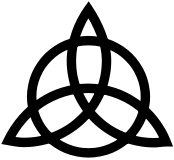
Jonas, the main character, discovers a Wormhole (which, in fact, this term is used by Einstein) and so discovers that it is possible to travel in time, 33 years forward and 33 years behind. So we have 3 dimensions that play with each other. The past, the present and the future, designed by the symbol of a trinity knot, another symbol used in “real life”. For those who do not know, a trinity knot represents three interlocking arcs, which are the cycle of eternal life. For the Celtic people, the first ones using this symbol, show the trinity knot as representing the Power of the Feminine, being the Mother (revealing life), the Ancient (linked to death) and the Virgin (linked to rebirth).

Basically, this series portrays the concept of time travel in these three dimensions (past, present and future) without creating new storylines. And what does this exactly mean?

Perhaps what makes the most itch in our brains when viewing this series is the fact that the three dimensions affect each other BUT no matter how you try to change the course of things is not possible. There is a predestined path and there is no way for entities to stray from the path, thus always creating this time loop a little difficult to perceive.

Perhaps one way to explain this temporal loop is through the grandfather’s paradox theory, in which it tells us that a boy who built a time machine wants to know his grandfather in the past and therefore travels to the time when his grandfather was young. However the question is put “What if the grandson changes the trace of the ways? Or he might even kill his grandfather? The grandson would no longer exist “

The situation here is that (according to this theory) … it is impossible for the grandchild to kill the grandfather because the grandchild exists in the future and existing in the future can not create an inconsistency in the destiny. If the grandchild kills his grandfather, the grandchild does not exist in the present and so could not go to kill the grandfather in the past, but if the grandson does not exist in the present and does not kill the grandfather in the past, the grandfather lives, having his son and therefore the grandson years later. Thus a paradox is born, or as the series designates, a temporal loop. This trip was already predestined, creating what the series speaks of not only the past that influences the future, but the future that influences the past as well.

There has been a temporal loop as there are several in the series and this is how it must happen so things go their way. The characters who think to change the course of their life or others, are actually only fulfilling what has already been done in the past. In the series, we see Noah, a character we still do not know how to really identify his role but who we realize is the character who makes sure to keep the time looping happening.

“Soon everything will start, the adult Jonas will destroy the hole, but what he does not know is that he himself is the trigger of his existence. A paradox. The cesium in his bag does not destroy the hole. It is he who creates the hole in the first place. “

As we can see by the 8 minutes from the end of the series, the future will once again mix with the past. We did not realize what started what. It looks very much like the question of who came first, the egg or the chicken.

This concept of temporal loop spoken in this series is different from many other films that also embrace the concept of time travelling, such as the movie Butterfly Effect (one of my favorites), which as its name indicates, refers us to the theory of Effect of Butterfly, in which the character to change the present travels in the past.

“Dark” is a difficult series to understand. Sometimes I confuse myself into my own thoughts about it, mainly because there is not this traditional middle beginning and end concept

 But what is a fact is that it has opened my mind to a larger world and to research more about the possibility of time travel.

So,Is it possible or not?

Well, physicists, they tell us so. It is possible to travel to the future.

Albert Einstein through the Theory of Relativity conveys that if we could travel to space very close to the speed of light, on the return, our clock would be walking at a slower pace and therefore would be future on Earth. The faster it goes, the more time expands. In short, time and space are not the same everywhere.

But is this the time travel reference we have? Not really. This may be better termed Time Dilation, and quoting Albert Einstein “Measured time along different trajectories is affected by different situations, whether it be gravity or velocity.”

So, as we are accustomed to imagining a trip to the future in a certain way, this would surely not be it, but in terms of space-time it is considered a journey into the future (traveling in the future in relation to your time in space).

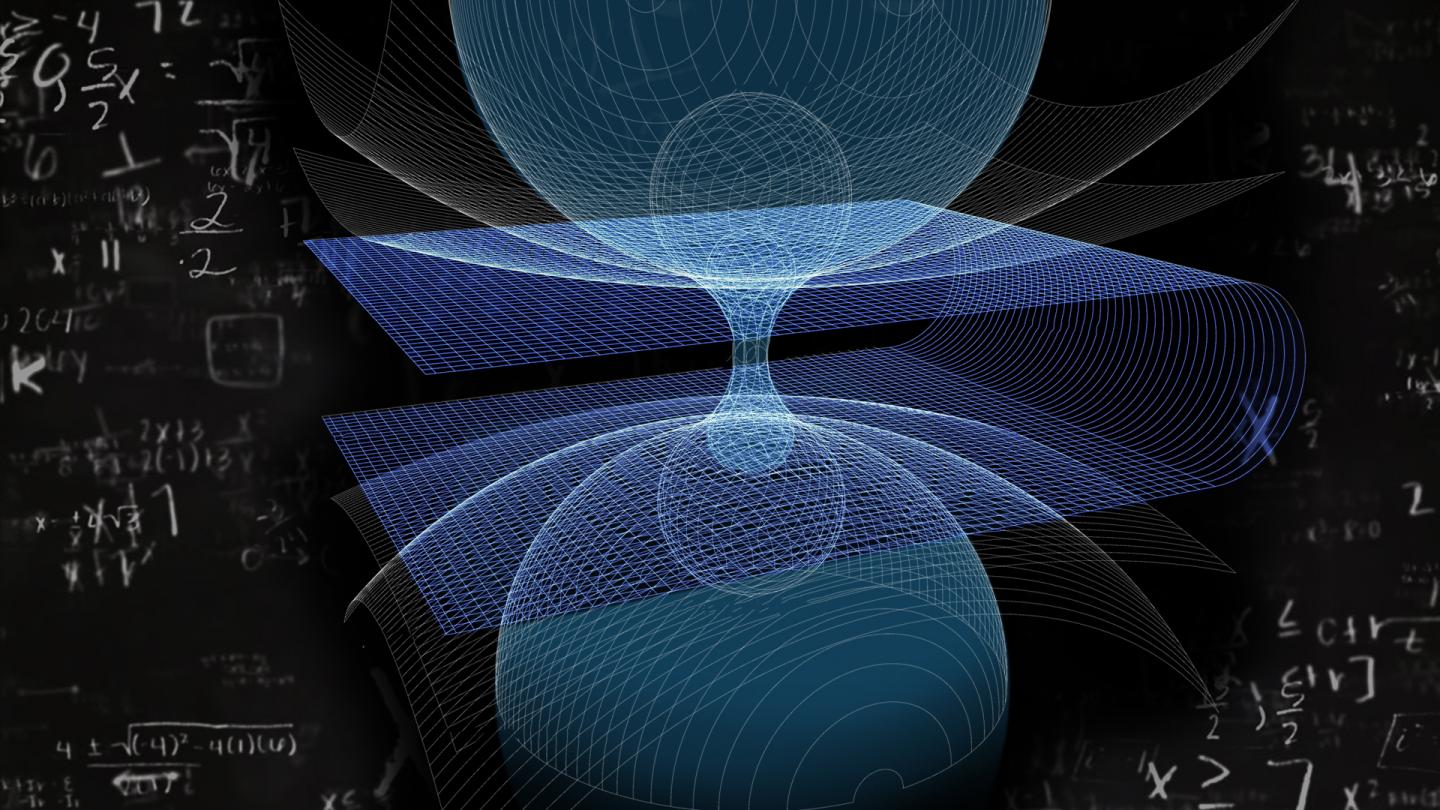
However, there is a way that can be attributed a designation closer to what we think is time travel and will be then the so called Wormholes, spoken in the series “Dark” and theorized by Einstein.

So what are Wormholes?

Simply put, Wormhole is an invisible bridge linking two portals. Each of these portals is an entry to a location. The fun part is now in the next step. Imagine that you can manipulate this Wormhole and accelerate one of the entrances at the speed of light. What would happen? As the two portals would no longer walk at the same pace, instead of moving through a shortcut from one location to another, for example, from my room to university, we would go like this to travel from one moment of time to another moment of time, having an entrance to the future and another to the present. Maybe we could even travel to different universes.

The only problem with Wormholes is that they are still hypothetical, not knowing if they are real or not, and even if they are, they are technically so small that they are difficult to discover and can not be easily opened because of the gravity that pulls them, closing themselves.

For now that I exist at a time when the Wormholes are not yet discovered and I can not write this article in a more fundamented  and futuristc time, I will anxiously wait for season two of “Dark”.

Versão em Português

(Disclaimer: Não sou nenhuma profissional. Sou apenas uma mente curiosa que ainda precisa de aprender muita coisa)

Encontrei uma nova série há dois meses atrás que tive de obrigatoriamente meter na lista das minhas preferidas. A série é alemã e chama-se Dark. Comecei a ver exatamente por ser alemã sem sequer saber inicialmente do que se tratava. Tenho este estranho fascínio pelo alemão, uma língua que para muitos é considerada fria e rígida, mas que para mim a sua fonologia tem algo de muito interessante, chegando a ser uma das minhas favoritas de ouvir e uma das línguas que tenho estado a tentar aprender por mim mesma.

O que eu não sabia é que ia ficar igualmente conquistada pelo plot da série. Simplesmente fantástico na minha opinião.

“Dark” que usa uma paleta de cores escuras e que adiciona um filtro também escuro à sua lente para captar a história obscura e misteriosa faz-nos crer que a cinematografia é tão pesada quanto a própria história, sendo assim consistente em querer mostrar os assassinatos, as mentiras e os segredos assustadores, tanto da vila como das personagens que à medida que as vemos crescer tornam-se aos nossos olhos mais solitárias e melancólicas.

Estamos no ano de 2019 e ao desaparecer uma criança e outras duas crianças mortas aparecerem do nada, o caos instala-se.

Jonas, a personagem principal, descobre uma Wormhole (que na verdade, este termo é usado por Einstein) e descobre assim que é possível viajar no tempo, 33 anos para a frente e 33 anos para trás. Portanto temos assim 3 dimensões que jogam umas com as outras. O passado, o presente e o futuro, designados pelo desenho de uma tríquetra, outro símbolo usado na “vida real”. Para quem não sabe, uma tríquetra representa três arcos interligados, o ciclo da vida eterno. Pelo povo celta, o criador pioneiro deste símbolo conta que a tríquetra representa o Poder do Feminino, sendo os três arcos, a Mãe (revelando a vida), a Anciã (ligada à morte) e a Virgem (ligada ao renascimento).

Basicamente, esta série retrata o conceito de viajar no tempo nestas três dimensões (passado, presente e futuro) sem criar novas histórias. E o que quer realmente dizer isto?

Talvez o que faça mais comichão no nosso cérebro ao ver esta série seja o facto de que as três dimensões se afetam umas às outras PORÉM por mais que se tente mudar o rumo das coisas não é possível. Há um caminho predestinado e não há maneira de as entidades se desviarem do caminho, criando assim sempre este loop temporal um pouco difícil de ser percebido.

Talvez uma maneira de explicar este loop temporal é através da teoria do paradoxo do avô, em que nos fala que um rapaz que construiu uma máquina do tempo, quer então conhecer o seu avô no passado e, portanto, viaja até ao tempo em que o avô é jovem. Entretanto a questão é posta “E se o neto muda o traço dos caminhos? Chegando até possivelmente matar o avô? O neto já não existiria”

A situação aqui é que (segundo esta teoria) … é impossível o neto matar o avô pois o neto existe no futuro e existindo no futuro não pode criar uma inconsistência no destino. O neto que ao matar o avô no passado passa a não existir e não existindo no presente, não poderia ir matar o avô no passado, mas se o neto não existe no passado e não mata o avô, o avô vive, tendo os seus filhos e mais tarde o seu neto. Nasce assim um paradoxo, portanto ou como a série designa, um loop temporal. Essa viagem estava assim já predestinada, criando o que a série fala de não ser apenas o passado que influencia o futuro, mas sim o futuro que influencia assim também o passado. Houve um loop temporal como existem vários na série e é assim que tem de acontecer para que as coisas sigam o seu caminho. As personagens que pensam mudar o rumo da sua vida ou de outras, estão na verdade apenas a preencher o que já foi feito no passado. Na série, vemos Noah, um personagem que ainda não sabemos identificar realmente o seu papel mas que percebemos que é a personagem que se certifica para manter o loop temporal a acontecer:

“Em breve vai tudo começar, O Jonas adulto vai destruir o buraco, mas o que ele não sabe é que ele próprio é o gatilho da sua existência. Um paradoxo. O césio na sua mala não destrói o buraco. É ele que o cria em primeiro lugar.”

Como podemos perceber a 8 minutos do final da série, o futuro volta a mexer de novo com o passado. Ficamos sem perceber o que começou o quê. Parece-se muito com a pergunta de quem veio primeiro, o ovo ou a galinha.

Este conceito de loop temporal falado nesta série é diferente de muitos outros filmes que também abrangem o conceito de viajar no tempo, como o filme Butterfly Effect (um dos meus favoritos), que como o próprio nome indica, remete-nos para a teoria Efeito de Borboleta, em que a personagem para mudar o presente viaja no passado.

“Dark” é uma série difícil de entender. Por vezes baralho-me nos meus próprios pensamentos sobre ela principalmente por não haver este início meio e fim. O que é um facto é que me abriu a mente para um mundo maior e pesquisar mais sobre a possibilidade de viajar no tempo.

Afinal é possível ou não?

Bom, físicos, contam-nos que sim. É possível viajar para o futuro.

Albert Einstein através da Teoria da Relatividade transmite que se pudéssemos viajar para o espaço bem próximos à velocidade da luz, no regresso, o nosso relógio estaria a andar a um passo mais devagar e, portanto, seria futuro na Terra. Quanto mais rápido se vai, mais o tempo se dilata. Em resumo, o tempo e o espaço não são iguais em todo o lado.

Mas será que esta é a referência que temos de viagem no tempo? Na verdade, não. Isto pode ser melhor designado por Dilatação de Tempo que, e citando Albert Einstein define como “Tempo mesurado ao longo de diferentes trajetórias que é afetado por diferentes situações, quer seja gravidade ou velocidade. Cada uma afeta o tempo de diferentes maneiras.”

Então, da maneira que estamos habituados a imaginar uma viagem ao futuro, não seria propriamente assim, mas em termos de espaço-tempo é sim considerada uma viagem ao futuro (viajar no futuro relativamente ao teu tempo no espaço).

Porém, existe uma maneira que se pode atribuir uma designação mais próxima àquilo que pensamos ser a viagem pelo tempo e será então através de Wormholes, falados na série “Dark” e teorizados pelo Einstein.

O que são então Wormholes?

Simplificando, Wormhole é uma ponte invisível que une dois portais. Cada um desses portais é uma entrada para uma localização. O divertido está agora no passo seguinte. Imaginemos que se consegue manipular este Wormhole e acelerar uma das entradas à velocidade da luz. O que aconteceria? Como os dois portais já não andariam ao mesmo passo, em vez de nos deslocarmos por um atalho de uma localização para outra como por exemplo, para não ter de acordar 2h e tal mais cedo, a de o meu quarto para a universidade, iríamos assim viajar de um momento de um tempo para outro momento de um tempo, tendo uma entrada para o futuro e outra para o presente. Possivelmente até poderíamos viajar para diferentes universos.

O único problema dos Wormholes é que são apenas ainda hipotéticos, não sabendo se são reais ou não e se o fossem, são tecnicamente tão pequeninos que são difíceis de descobrir e de os conseguir abrir devido à gravidade que os puxa para se fecharem.

Por enquanto, que existo no tempo em que os Wormholes ainda não são descobertos e eu não possa escrever este artigo de uma forma mais fundamentada e provada, espero ansiosamente a nova temporada de “Dark”.

Trinity Knot/ Tríquetra
Wormhole

Positive Psichology

For many years I have always had a more negative understanding of the world and the view I have of myself and like so many other people who are unfortunately the majority, this has often made me embrace the emptiness, cling to my faults and failures and let the four walls inside me take over my greater self, which at the same time both of us wanted to pluck them.

The black days without the possibility of a broad perspective of a continuously sunny future were also part of my present.

It was around March 2018 that I began to feel differently. And here I refer a little to the common-sense question of “Who was born first? The chicken or the egg “correlating in a way, I think with a more scientific end to” Did I start to feel better because I was doing things or was I doing things because I felt better? “(Well, for a scientific study I would not ask the question in this way but I think we all got there).

There is an intrinsic truth that fights every day with our thoughts set on negativity that sadly we call realism. The intrinsic truth will then be to do things. More concretely  pushing our self to do things, things that please us even when we can not do them … or when we think we can not.

This intrinsic truth within me came out in March 2018 and when I pulled myself to have a positive thought I noticed how much my life has changed and how much I could change my life for the better.

It has been a mindset that I have never left since then, even when I encounter obstacles in life, one’s being more relevant than others but it doesn’t make me detract from the theory of ” the happiness advantage”, when the positivism in someone is in proportion to success. Being that we produce more dopamine (a neurotransmitter of our nervous system) that makes us happier so to speak, but also triggers the learnings centers in the brain.

Then, so it comes positive psychology. One should not think of positive psychology as motivational phrases clichés that irritate anyone but rather as an investigation into the positive personality of the individual, subjective well-being and teaching of resilience or potentially healthy and positive aspects of humans as opposed to classical psychology that places more emphasis on psychopathological aspects.

And using positive psychology in our quotidian is to outline the positive things of our day instead of just murmuring about negative or boring things that happened. Let us not forget that the absence of disease will not be entirely synonymous with being healthy and that it is important to focus on building our self around our strengths and qualities and embracing the challenges of life not being afraid to look forward to an error.

We can only predict 10% of someone’s long-term happiness if we consider about their external world but 90% of happiness will be by the way their brain processes the world. So, “reality does not shape us necessarily but the lenses by which our brain sees the world” (Alison Ledgerwood).

Not wanting to be boring, to finish we can highlight the good things in life by creating more positive habits. A habit creates new neural pathways and if we practice an activity for 21 days becomes a truth and a habit for us. These activities are good for beginning a thought of happiness advantage:

• Write good things that happened that day and talking to someone about gratitude (it also helps to relive those memories);

• Meditation (in which in the future it will help in the focus of accomplishing one task and not being in the confusion of several);

Acts of kindness which are considered the greatest revolutions.

With this, like everything being easier said than done and certaintely not being a cure for pathological disorders, I think it is a good initiation path for each one of us.

 There is beauty everywhere, the important thing is to believe to see.